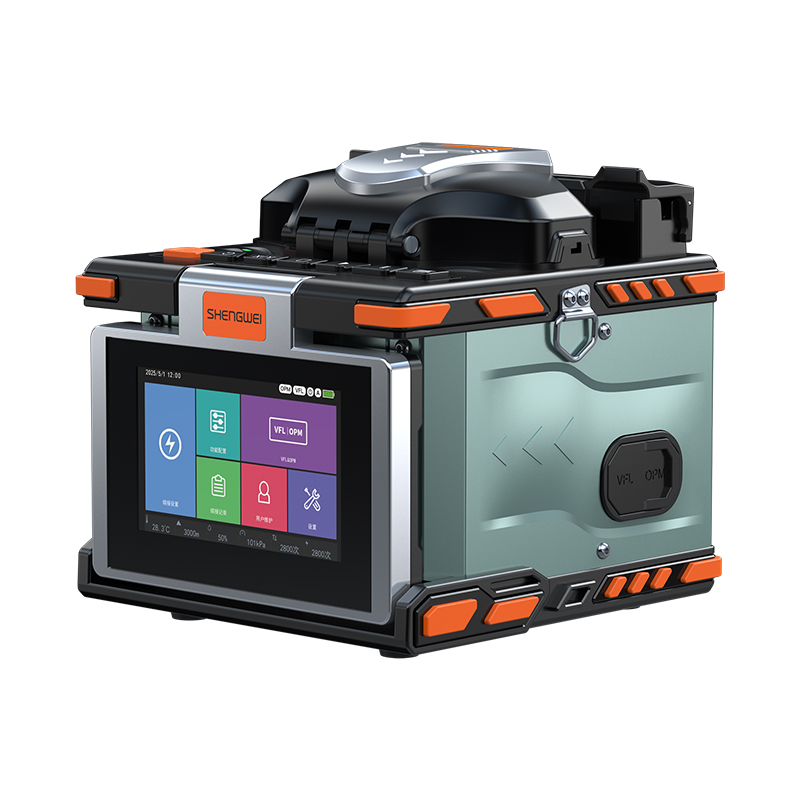
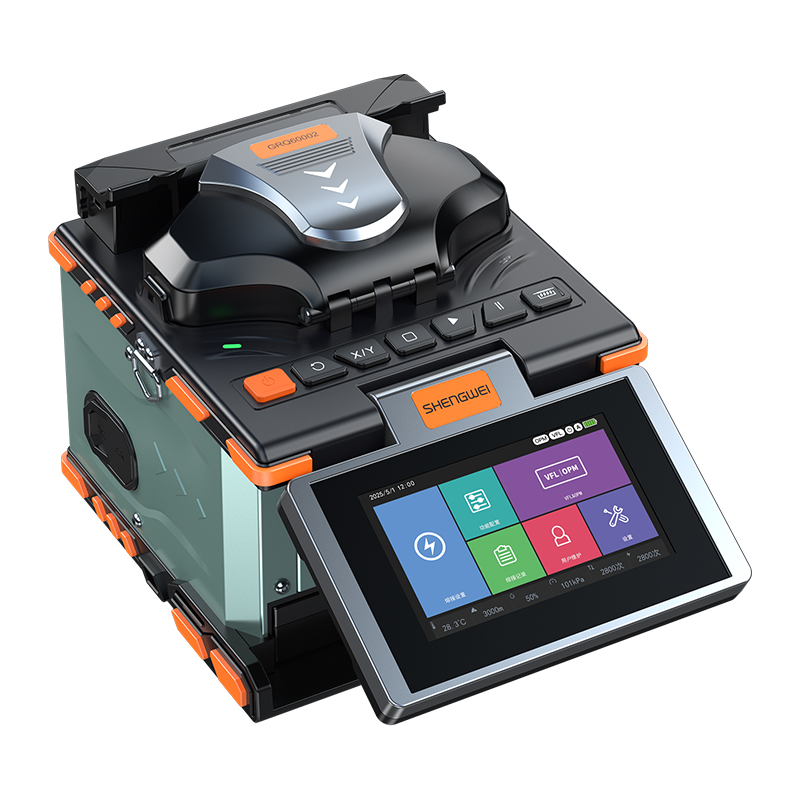
Automatic Fiber Splicer Description
This 6-motor fiber fusion splicer is designed for accurate, low-loss optical fiber connection in FTTH, telecom, data center, and field maintenance projects. It combines six-motor core alignment, built-in VFL, OPM, fast splicing, and heat-shrink protection to help technicians splice, test, and verify fibers on site. The product is suitable for telecom contractors, ISPs, network installation teams, and maintenance companies that need stable performance in demanding field conditions. As a fiber optic equipment supplier, manufacturer, exporter, and wholesale partner, SHENGWEI supports distributor cooperation, bulk orders, and project purchasing. Contact us for technical details, quotation support, and B2B supply options.
Automatic Fiber Splicer Technical Data Sheet
| Parameter |
Specification |
| Model |
GRQ60002 |
| Dimensions (H x W x D) |
156 x 155 x 152 mm |
| Weight |
1.74 kg (with battery) |
| Power Supply |
DC 11.1V / AC 100-240V, 50/60Hz |
| Battery |
5200 mAh (~200 splices per charge) |
| Electrode Life |
Approx. 3,000 splices |
| Applicable Fibers |
SMF G.652 / MMF G.651 / DSF G.653 / NZDSF G.655 |
| Typical Splice Loss |
SMF: 0.02 dB / MMF: 0.01 dB / DSF/NZDSF: 0.04 dB |
| Splice / Heat Time |
8 sec typical (SMF) / 18 sec heating |
| Operating Temperature |
-15 to +50 degrees C |
| Alignment |
Six-Motor Core and Cladding Auto-Focus |
| Splicing Mode |
Auto / Manual |
| Display |
4.3-inch Capacitive Touch LCD |
| Splice Record Storage |
10,000 records and 1,000 images |
| Built-in Tools |
VFL over 10 mW / OPM: -70 to +3 dBm, 850-1625 nm |
| Operation Interface |
GUI (Graphical User Interface) |
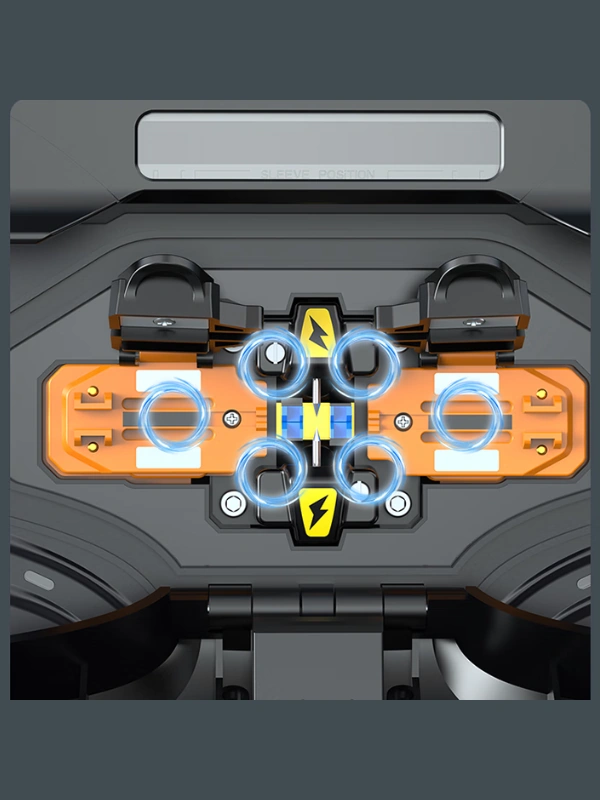
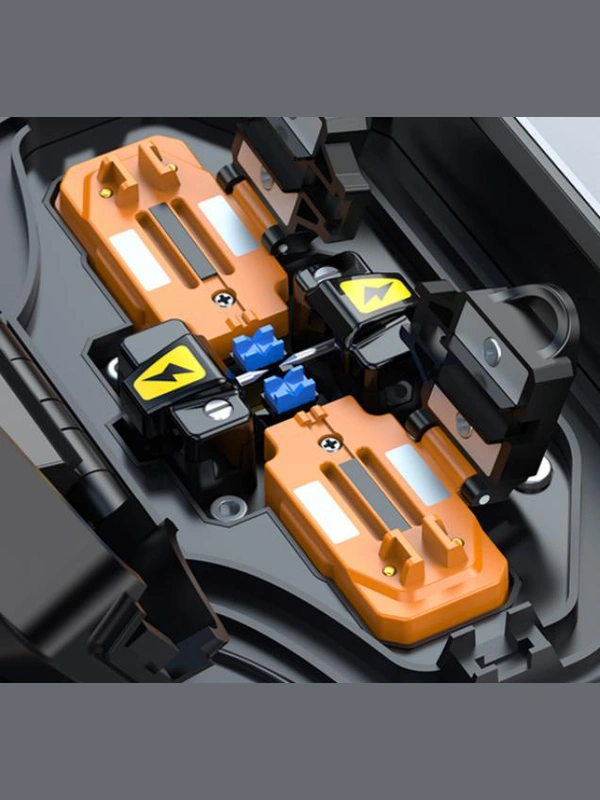
Detail Display
Fiber Optic Fusion Splicer Applications
1. FTTH and Broadband Installation
This fiber fusion splicer is used for drop cable splicing, home fiber access, and customer-side broadband installation. The 8-second typical splice time and 18-second heating time help ISPs and field technicians finish more connections during daily deployment work.
2. Telecom Network Maintenance
Telecom contractors can use the built-in 10mW VFL to locate visible fiber faults and the OPM to check optical power during repair work. This helps reduce troubleshooting time when fiber links are broken, unstable, or affected by signal loss.
3. Data Center and Enterprise Cabling
In data centers and enterprise communication rooms, stable low-loss fiber connections are critical for high-speed transmission. The 6-motor core alignment system helps installers create consistent splices for both SMF and MMF fiber links.
4. Outdoor and Aerial Fiber Projects
The 1.74kg portable body and -15°C to +50°C operating range make this splicer suitable for pole work, roadside construction, and outdoor cable deployment. Field teams can complete splicing and testing with fewer separate tools on site.
5. Fiber Optic Training and Technical Service
The 4.3-inch touchscreen, auto/manual modes, and 10,000 splice records make the machine useful for training centers and service teams. Trainers can demonstrate standard splicing procedures while technicians review saved operation data and splice quality records.