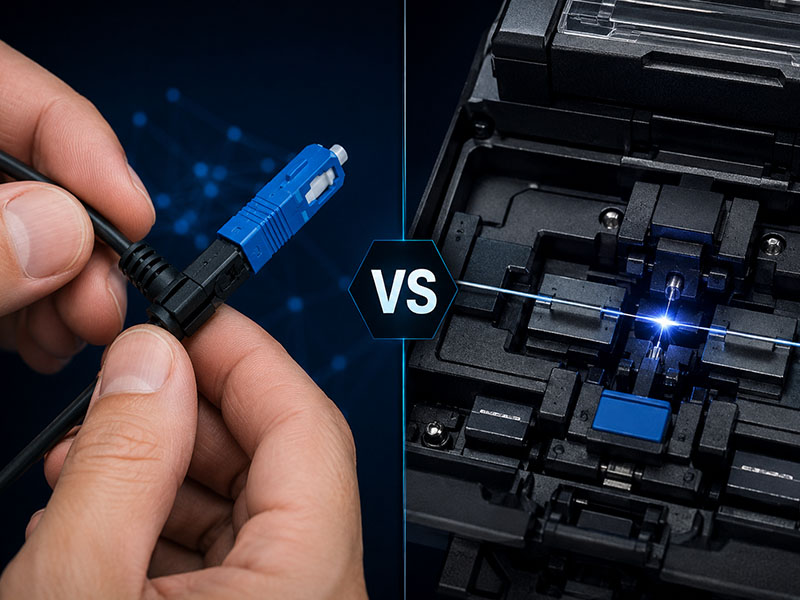
When deploying fiber to the home (FTTH), one decision comes up on nearly every project: should you use a fast connector or fusion splicing to terminate the drop cable?
Both methods work. Both are widely used. But they serve different scenarios — and choosing the wrong one costs you time, money, or signal quality.
This guide breaks down the real differences so you can make the right call on your next deployment.
What Is a Fast Connector?
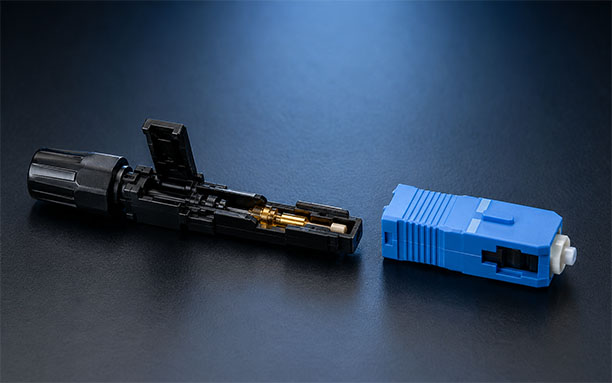
A fast connector (also called a mechanical splice connector or field-installable connector) is a pre-polished fiber optic connector designed for on-site termination without any specialized equipment.
Inside the connector body is a pre-polished ceramic ferrule. When a field technician inserts a cleaved fiber, the fiber butts up against the pre-polished end face, and a mechanical clamping mechanism locks it in place.
Tools required: fiber stripper, fiber cleaver Time per termination: under 60 seconds Result: a standard SC, LC, or FC connector ready to plug into any compatible port
Fast connectors are available in SC/UPC, SC/APC, LC/UPC, and LC/APC configurations, covering the full range of FTTH last-mile requirements.
What Is Fusion Splicing?
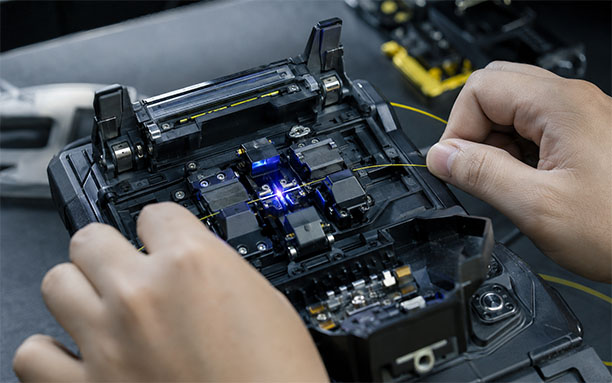
Fusion splicing is a method of permanently joining two optical fibers by melting them together using an electric arc. A fusion splicer aligns the two fiber ends with sub-micron precision, then fuses them into a single continuous fiber.
The result is not a connector — it is a permanent joint. A fusion splice protector sleeve is applied over the splice point and heat-shrunk to secure it.
Tools required: fusion splicer, fiber cleaver, fiber stripper, heat shrink oven Time per splice: 3–8 minutes (including setup, splicing, and sleeve shrinking) Result: a permanent, low-loss fiber joint — not a pluggable connection
Fusion splicing is the standard method for joining fiber in backbone cables, distribution cables, and any permanent infrastructure where the highest optical performance is required.
Fast Connector vs Fusion Splicing: Head-to-Head Comparison
| Parameter | Fast Connector | Fusion Splicing |
|---|---|---|
| Insertion Loss | ≤ 0.3 dB (typical) | ≤ 0.1 dB (typical) |
| Return Loss | ≥ 45 dB (UPC) | ≥ 60 dB |
| Installation Time | < 60 seconds | 3–8 minutes |
| Equipment Required | Cleaver + Stripper | Fusion Splicer + Cleaver + Stripper |
| Equipment Cost | Low | High (splicer: $500–$5,000+) |
| Skill Level Required | Low — trainable in minutes | Medium — requires practice |
| Connection Type | Pluggable (removable) | Permanent (non-removable) |
| Re-termination | Yes — replaceable | No — requires re-splicing |
| Best For | FTTH last-mile, subscriber drop | Backbone, feeder cable, long-haul |
| Operating Temperature | -40°C to +85°C | Depends on splice protector |
Where Fast Connectors Win
Last-Mile FTTH Drop Cable Termination
The final connection point between the distribution network and the subscriber premises is where fast connectors dominate. Technicians terminate hundreds of drop cables per week. At under 60 seconds per connection versus 5+ minutes for fusion splicing, the time savings across a large ISP rollout are significant.
No Capital Equipment Required
A fusion splicer represents a substantial upfront investment — anywhere from $500 for entry-level units to over $5,000 for high-performance models. Fast connectors require only a fiber cleaver and stripper, tools every field technician already carries.
Flexibility and Re-termination
If a subscriber moves, a port changes, or a connection needs to be reconfigured, a fast connector can be replaced on the spot. A fusion splice requires cutting the fiber and re-splicing — a more disruptive process.
Low Barrier to Entry
Training a new technician to use a fast connector correctly takes minutes. Fusion splicing requires hands-on practice to consistently achieve low-loss results, particularly in outdoor or challenging field conditions.
Where Fusion Splicing Wins
Backbone and Feeder Cable Infrastructure
For trunk cables, feeder cables, and any segment carrying aggregated traffic from multiple subscribers, the lower insertion loss of fusion splicing matters. In a long cascade of connections, 0.1 dB versus 0.3 dB per joint adds up quickly.
High-Density Long-Distance Links
Data centers, carrier backbone networks, and metro fiber rings demand the tightest optical budgets possible. Fusion splicing is the industry standard for these applications — and for good reason.
Permanent Outdoor Infrastructure
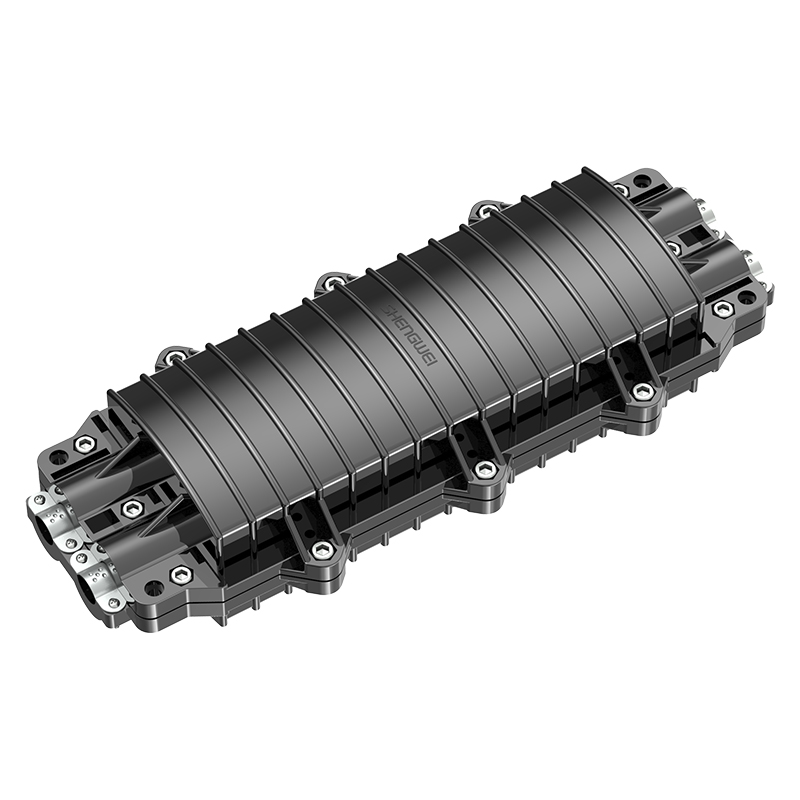
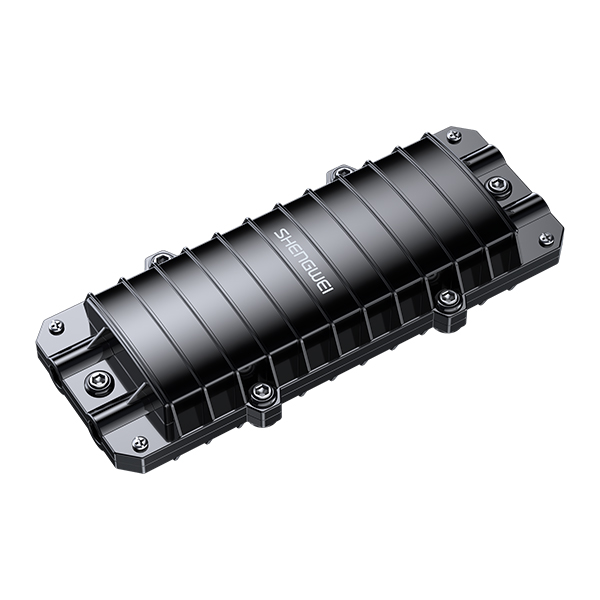
In aerial or underground plant where connections will never need to be reconfigured, the permanence of fusion splicing is an advantage. A well-executed fusion splice in a quality splice closure will outlast the cable itself.
High Return Loss Requirements
Applications sensitive to back-reflection — such as CATV, coherent optical systems, or high-power fiber lasers — require return loss values above 55 dB. Fusion splicing consistently achieves ≥ 60 dB, which most fast connectors cannot match.
The Real-World Decision Framework
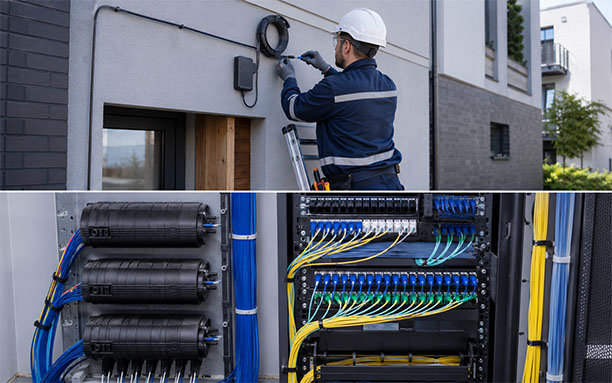
Most FTTH network operators use both methods — not one or the other.
A typical FTTH deployment uses this split:
- Fusion splicing → backbone cable joints, feeder cable splices, distribution cable terminations inside splice closures and fiber distribution boxes
- Fast connectors → drop cable termination at the subscriber premises, patch cord connections at the ONU, field repairs and emergency re-terminations
If you are an ISP deploying at scale, the economics are clear: fusion splicing where optical budget demands it, fast connectors everywhere speed and flexibility matter more than the last 0.2 dB.
If you are an EPC contractor working on a single building or campus, fast connectors alone may handle the entire job without requiring a fusion splicer on-site at all.
Common Mistakes to Avoid
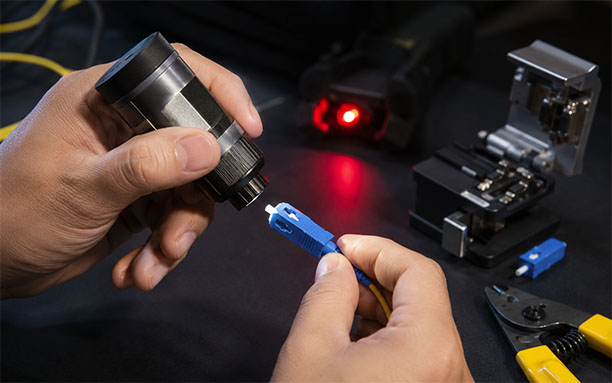
Using fast connectors on long cascaded links — if your optical power budget is tight and you have multiple connection points in series, the cumulative insertion loss of fast connectors can push you outside acceptable limits. Calculate your link budget before choosing.
Poor cleave quality with fast connectors — a fast connector is only as good as the fiber cleave. A bad cleave angle increases insertion loss significantly. Always use a quality cleaver and inspect the end face before insertion.
Skipping end face inspection after fusion splicing — fusion splices occasionally produce poor results due to fiber contamination or misalignment. Always verify with an OTDR or optical power meter before closing the splice closure.
Summary
Fast connectors and fusion splicing are complementary tools, not competing ones. Understanding where each method belongs in your network architecture leads to faster deployments, lower costs, and better long-term performance.
For FTTH last-mile termination where speed, flexibility, and low equipment cost matter most — fast connectors are the right choice.
For backbone infrastructure where optical performance cannot be compromised — fusion splicing remains the industry standard.
Related products: SC/UPC Fast Connector · Fiber Optic Fusion Splicer · Fiber Optic Cleaver · Splice Closure · Fiber Distribution Box